
TLCTC on GitHub
Whitepaper PDFs, JSON schemas, MITRE ATT&CK and CWE mapping databases, and the v2.1 extension specs — open and versioned. Fork, file issues, contribute.
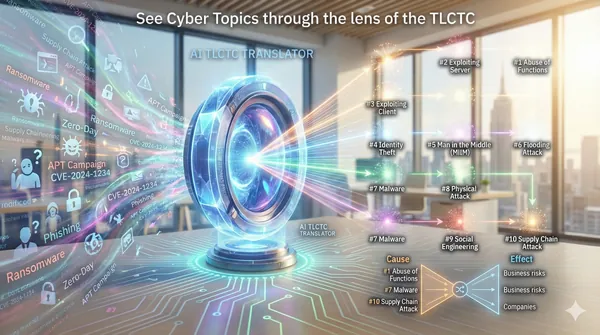
AI Prompt
See Cyber Topics through the lens of TLCTC. Copy and paste any cyber topic into this AI prompt and experience Cyber Security and Cyber Risk Management through the first truly consistent causal paradigm.
Monster Prompts · 5 Peer Groups
One canonical TLCTC v2.1 core, reshaped for CTI/Forensic, SOC/Detection, DevSecOps, CISO/Risk, and Regulators/Standards. Pick the variant that matches your role.
CTI & Forensic Prompt
Deep classifier for threat-intel analysts and IR. Full notation pedagogy, 22 worked examples, every R-* rule, unresolved-step protocol.
SOC & Detection Prompt
Translate alerts, ATT&CK IDs, EDR/SIEM telemetry, and IOCs into TLCTC attack paths with Δt velocity, ATT&CK pivots, and detection-coverage call-outs.
DevSecOps & Engineering Prompt
Paste in code, design docs, CWE entries, dependency lists, or threat-model components and get per-component cluster exposure, CWE-grounded fixes, and shift-left controls.
CISO & Risk Prompt
Incident summaries, audit findings, or risk-register entries → cluster-attributed risk narrative, NIST CSF 2.0 control-gap table, FAIR loss-event framing, board-ready bullets.
Regulators & Standards Prompt
NIS2 / DORA / SEC 8-K filings or CERT bulletins → cluster classification of root cause, TLCTC+ Business Risk Event tags, reporting-taxonomy crosswalk, and gap commentary.

SOC Incident Threat Modeling · v3.0
The official IDE for TLCTC. Model complex attack paths, calculate Attack Velocity (Δt), and export standardized JSON schemas for your SOAR.
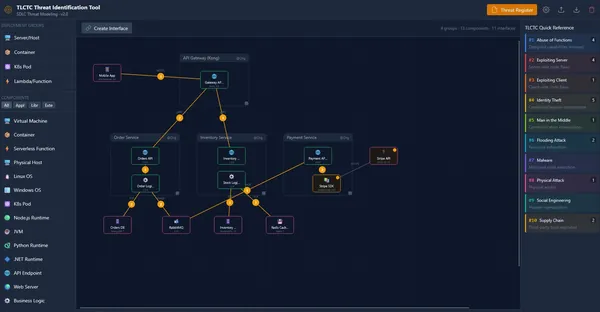
SDLC Threat Modeling · v2.0
Model a system from components and interfaces. Client and server roles are detected per link; each component gets its threats by cluster.
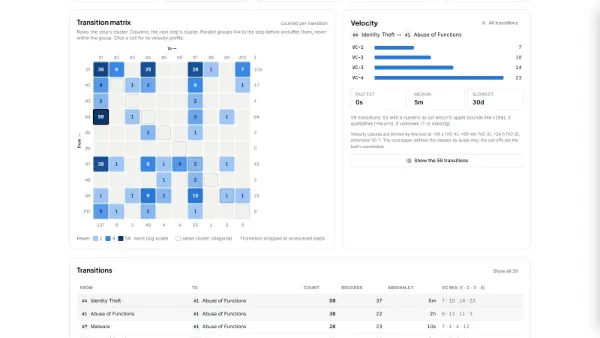
Path Atlas
Which cluster follows which, and how fast: a transition matrix, attack velocity per transition, entry and exit clusters and Data Risk Events over the 59 bundled attack paths — or over your own.
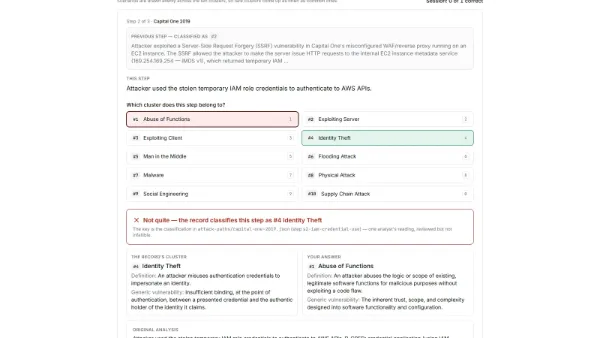
Classification Trainer
Classify real attack-path steps into the ten clusters with instant feedback — or run a study: several analysts rate the same set and Fleiss’ κ shows how reproducibly they classify.
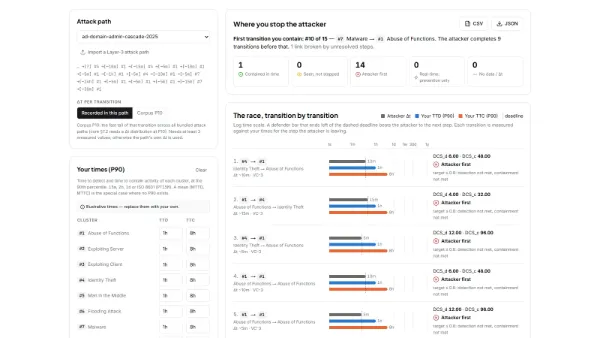
Δt Race
Set an attack path against your time to detect and to contain: DCS per transition, where the attacker completes a step first, and the first transition you would contain.
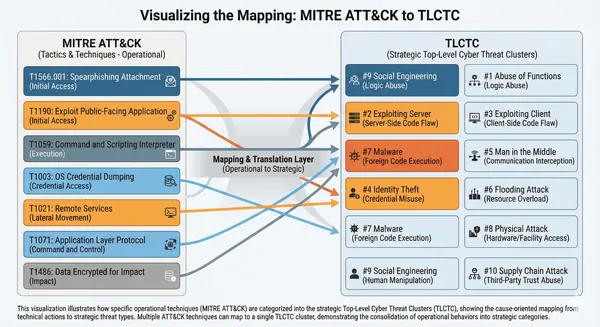
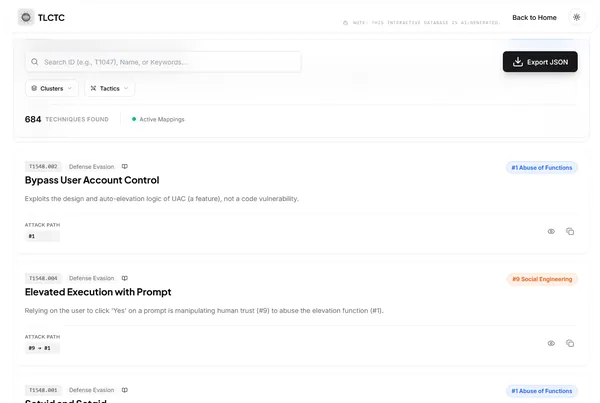
MITRE ATT&CK TLCTC MAPPER
Explore the complete mapping database interactively. Filter by Tactic, Technique, or TLCTC Cluster to see the relationships in real-time.
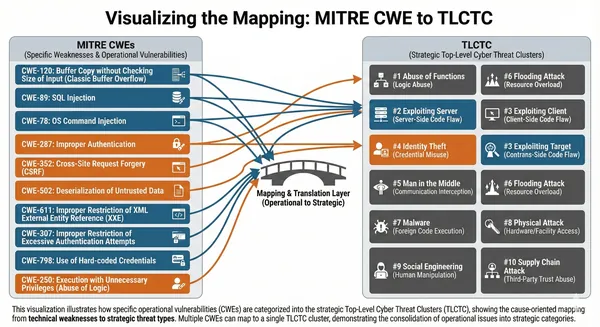
TLCTC & CWE Mapping Explorer
An analysis of the complementary relationship between MITRE CWE and TLCTC. Explains why a 1:1 mapping is not possible and provides an interactive CWE mapping explorer.
ATT&CK Phase Heatmap
Load ATT&CK phase mappings and visualize technique frequency as a heatmap, filtered by TLCTC cluster. Instantly see which clusters dominate each attack phase.
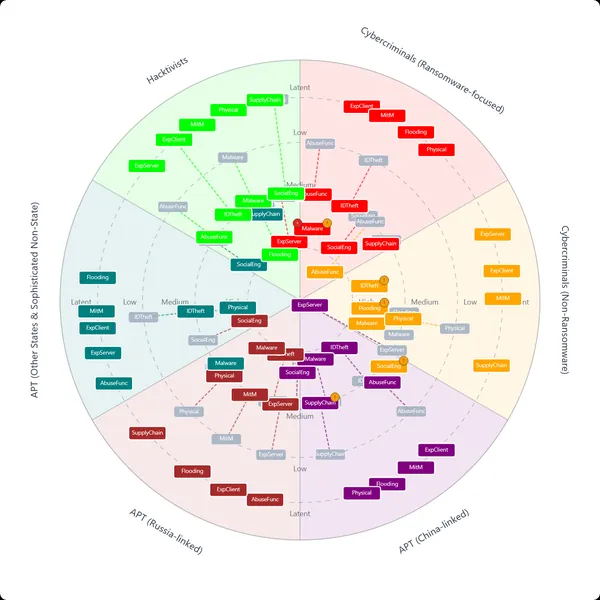
Threat Radar App
Transform dull risk spreadsheets into Board-ready radar visualizations. Map emerging tech and actors directly to the 10 clusters.

See the Threat Capabilities
Strategic Threat Profiling: The Actor Profile Designer.
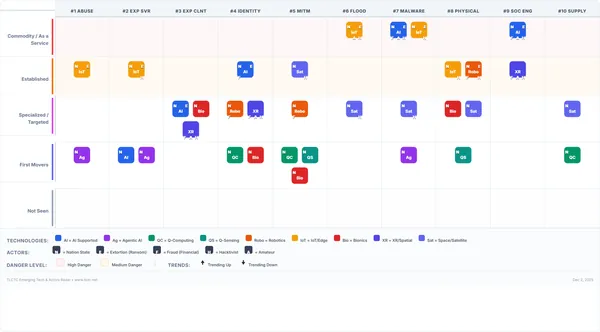
See the Tech Capabilities
Strategic Threat Profiling: The Actor Profile Emerging Tech Radar.
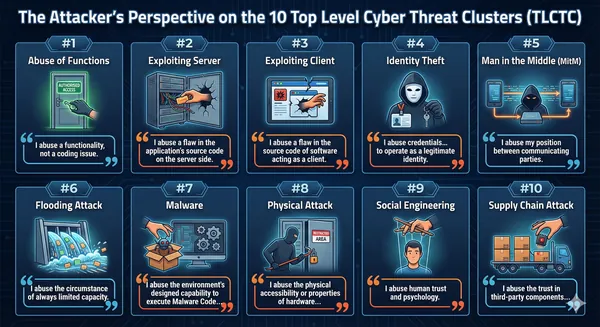
Actor Story Designer
Design threat actor stories combining TLCTC capability profiles and Diamond Model-framed narrative intelligence. Build structured CTI narratives for briefings and exercises.
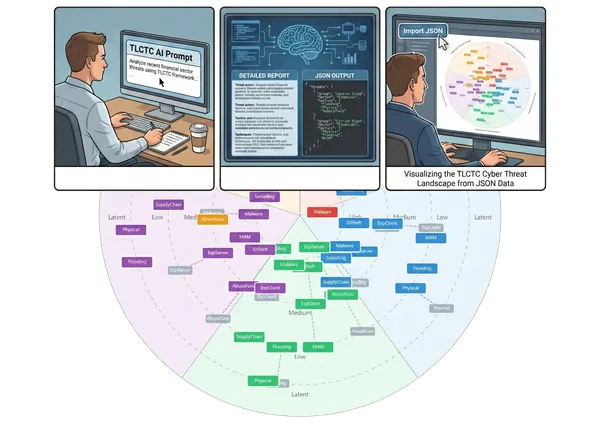
Report to Radar (AI)
Copy-paste prompts to instruct LLMs to parse CTI reports and output valid TLCTC JSON for the Architect and Radar apps.
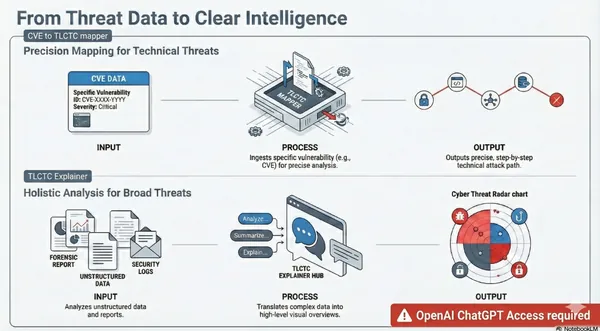
AI Supported Cyber Sec
See Cyber Topics through the lens of the ChatGPT Custom GPT TLCTC Explainer or CVE to TLCTC Mapper. Includes already V2 material.
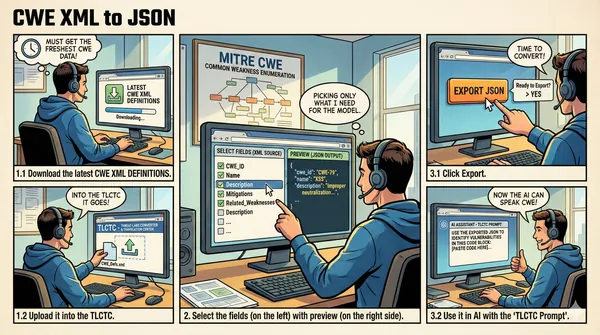
CWE XML Converter
A specialized utility to convert MITRE CWE XML dumps into clean, usable JSON for integration with TLCTC frameworks.
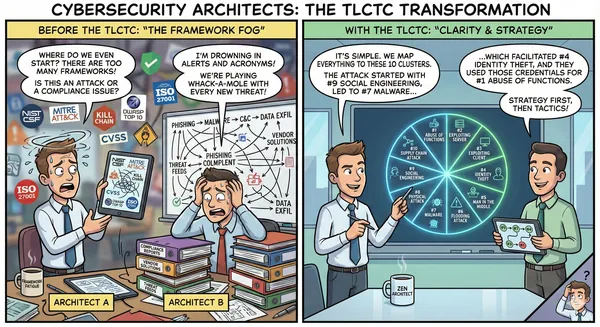
Capability-Based Planning
Map organizational security capabilities across the 10 TLCTC clusters and 6 NIST CSF functions. Assess maturity at the capability level and export structured JSON for governance reporting.
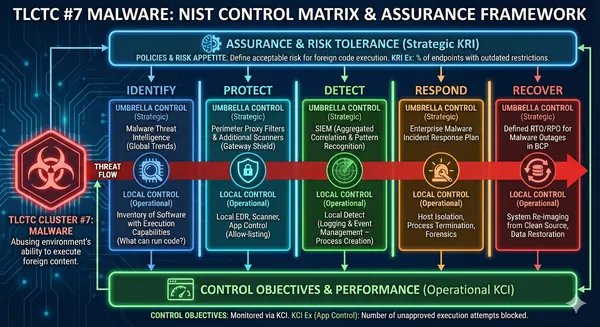
Control Matrix Manager
Manage cyber security control maturity across the 10 TLCTC clusters and 6 NIST CSF functions. Document Local and Umbrella controls per environment and track residual risk.
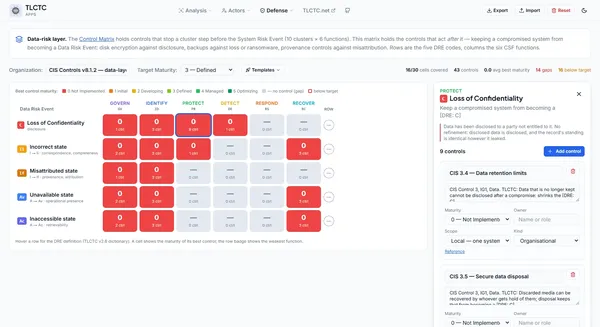
DRE Control Matrix
The data-risk layer next to the Control Matrix: controls that act after a system is compromised — disk encryption, backups, provenance controls — across the five Data Risk Event codes (C, Ii, If, Av, Ac) and six CSF functions.
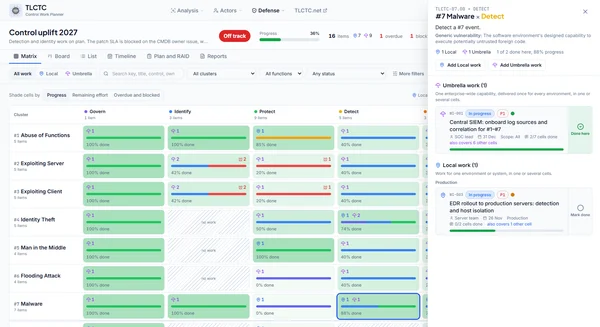
Control Work Planner
For project managers: the work behind the Control Matrix, cell by cell, Local and Umbrella apart. Board, timeline, milestones, RAID log, reports.
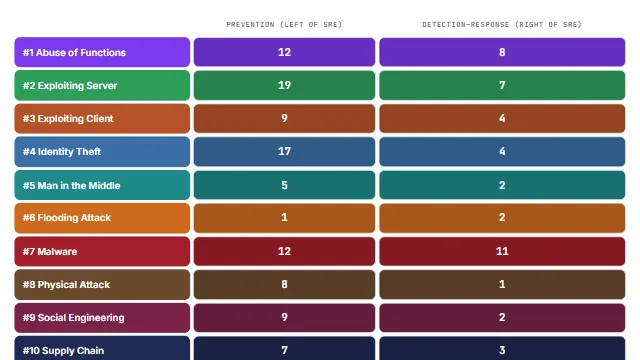
CIS Controls v8.1 → TLCTC
Every v8.1 Safeguard placed on the cluster and Bow-Tie side it acts on, with the umbrellas and the thin spots called out.
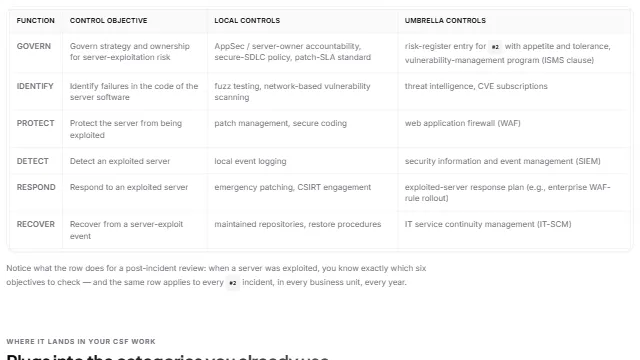
NIST CSF 2.0 × TLCTC
Give your CSF profile a threat axis: control objectives per cluster and function, local and umbrella controls, 106 subcategories mapped.
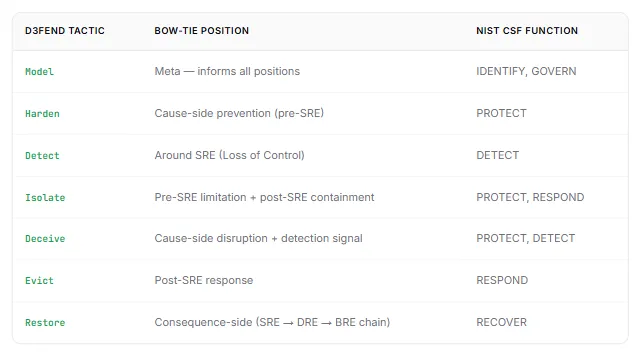
D3FEND × TLCTC
D3FEND tactics placed on the Bow-Tie and the CSF functions, so countermeasures line up with the clusters they act on.
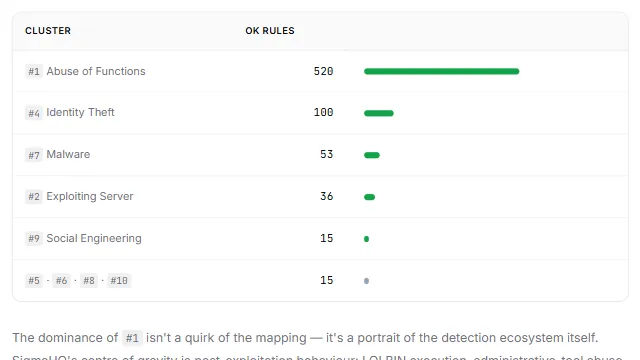
Sigma Coverage Map
SigmaHQ rules mapped through ATT&CK to the ten clusters: a coverage map of the detections you run, blind spots included.
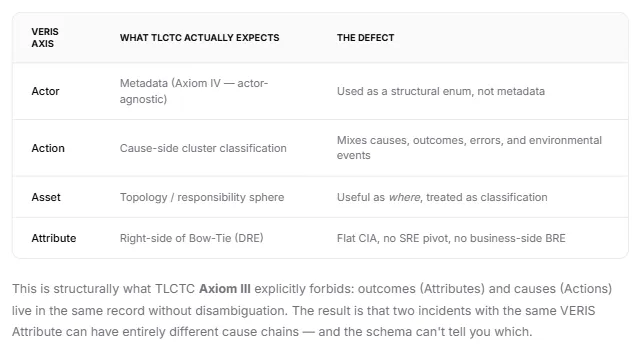
VERIS × TLCTC
VERIS read through TLCTC: clusters replace the Action axis, Data Risk Events expand the Attribute axis; tested on VCDB.